
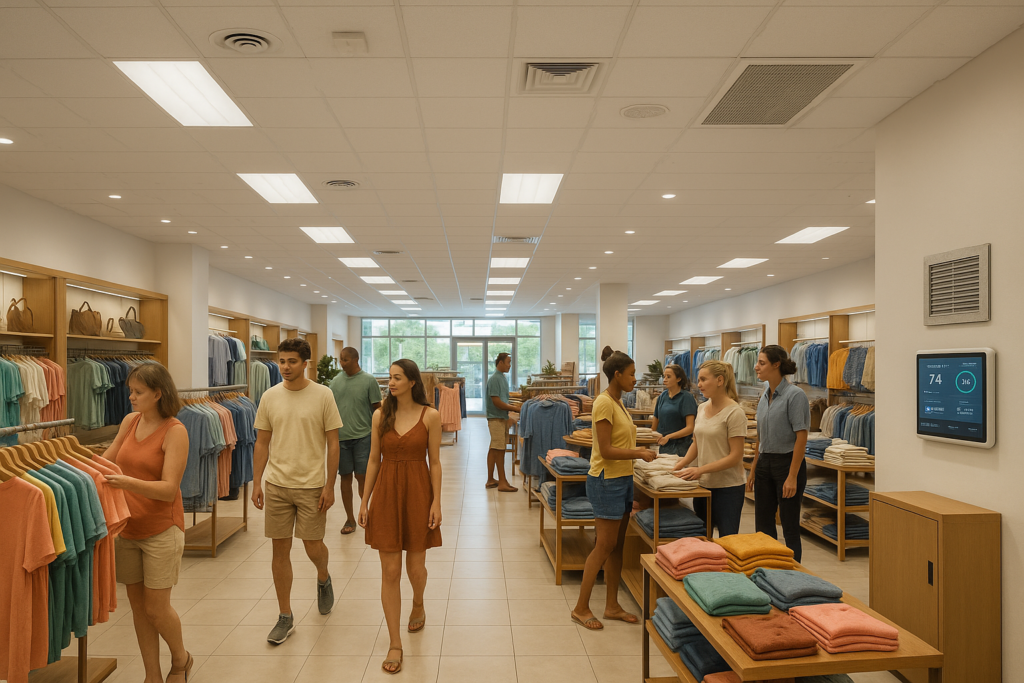
Why Smart Retail HVAC Maintenance Silently Protects Your Sales
Our customers rarely think about the air around them when they walk into a store, but we know it’s quietly deciding whether they stay and shop or turn around and leave. In a retail space, comfort is part of the product. When the temperature is off, the air feels stale, or there’s a faint odor from a struggling unit, it chips away at sales in ways that never show up on a simple HVAC invoice. That’s why we treat retail HVAC maintenance as a sales protection strategy, not just a technical chore.
In a busy retail environment in Tyler TX, every hour of uptime matters. A failed air conditioner on a 100-degree day can empty a store faster than a pricing mistake. Smart maintenance helps us predict and prevent those moments before they happen. By tracking performance trends, fine-tuning system controls, and scheduling work strategically, we silently protect the customer experience that drives revenue. Our goal is simple: keep your store so consistently comfortable that no one notices the HVAC at all—because that’s when it’s doing its best work for your bottom line.
How Comfort Drives Conversions in Retail Spaces
We’ve seen firsthand how a well-tuned retail HVAC system shapes the way customers behave inside a store. It’s easy to focus on merchandising, lighting, and staffing—and you should—but comfort is the silent partner that makes all of those investments pay off. When the temperature is right and the air feels fresh, shoppers slow down, browse longer, and buy more.
The Psychological Impact of Temperature and Air Quality
We notice patterns across many retail locations in Tyler TX: customers linger longer when they feel physically at ease. Several factors come into play:
– Temperature: Studies show that for most retail environments, a temperature around 72–75°F encourages people to stay longer without fatigue.
– Humidity: High humidity makes spaces feel “heavy” and sticky, even when the thermostat reading looks fine.
– Air quality: Dust, odors, and CO₂ buildup can subtly create discomfort, headaches, and irritability.
In our experience, when a store is slightly too warm or too cold, shoppers unconsciously speed up. They grab what they need and rush out instead of browsing your displays or considering add-on purchases. A poorly maintained retail HVAC system can be the hidden reason behind:
– Lower average basket size
– Reduced time spent in-store
– More customer complaints at the register or on reviews
On the other hand, we’ve supported retailers who upgraded and maintained their HVAC systems and then noticed:
– Higher dwell times in key merchandising zones
– Better conversion rates on promotional displays
– Fewer staff complaints about fatigue, headaches, or “stale air”
Comfort as a Competitive Edge in Tyler TX
In a city like Tyler TX, where summer heat can be brutal and winter swings can surprise us, consistency is everything. Customers often have multiple options within a short drive—especially in major retail categories like apparel, groceries, and home goods. If one store always feels stuffy or uncomfortably cold, they migrate to a competitor without even realizing why.
We’ve watched retailers gain an edge simply by being known as the store that “always feels nice inside.” That edge is built quietly, day after day, through smart retail HVAC maintenance:
– Proper zoning so entrances, fitting rooms, and checkout lines all feel comfortable
– Calibrated thermostats so there are no hot and cold spots throughout aisles
– Clean, well-maintained filters and coils that keep air quality fresh and neutral
When comfort is reliable, customers come back. They stay longer. They feel relaxed enough to engage with your displays, ask questions, and consider purchases they didn’t plan on. Your HVAC system isn’t just an expense on your P&L; it’s part of your marketing, your brand, and ultimately, your sales machine.
Smart Maintenance Strategies That Keep Retail HVAC Working for You
We approach retail HVAC maintenance like a long-term partnership with your sales goals. Instead of just reacting to breakdowns, we design a proactive plan that anticipates issues and optimizes performance. In retail, even a short outage can mean lost revenue, damaged product, and a tarnished reputation—so we stack the odds in your favor.
Building a Proactive Maintenance Plan
Our starting point is always a structured maintenance schedule customized to your store’s size, layout, and traffic patterns. A smart plan typically includes:
– Seasonal tune-ups: At least twice a year, before cooling and heating seasons, we fully inspect and service the system.
– Filter changes: High-traffic locations may need more frequent filter replacements to handle dust, pollen, and foot traffic.
– Coil cleaning: Dirty coils force your system to work harder, driving up energy costs and reducing cooling power.
– Electrical checks: Loose wiring, failing capacitors, or contactors often cause sudden failures at the worst possible time.
We align maintenance visits with your business needs—scheduling early mornings, off days, or slower hours to minimize disruption. Over time, we track trends in performance and repair history, which helps us spot patterns before they become emergencies.
Key elements we watch closely include:
– Rising energy consumption without a change in store hours or weather
– Increasing runtime or short cycling of units
– Frequent temperature complaints from staff or customers
– Repeated issues with certain zones or equipment
Each of these signals helps us fine-tune our approach so your retail HVAC system stays ahead of problems.
Using Data and Smart Controls to Protect Uptime
Today’s smarter controls can quietly save your sales day after day. When available, we like to integrate:
– Programmable or smart thermostats: Proper scheduling cuts energy use during closed hours while ensuring comfort when doors open.
– Remote monitoring: For some locations, we can track performance data and alarms remotely, catching issues early.
– Zoning controls: Each area—entry, sales floor, offices, storage—gets tailored settings for comfort and efficiency.
We’ve helped multiple local retailers in Tyler TX reduce surprise failures simply by calibrating thermostats properly and training managers on adjusting setpoints wisely. Instead of constantly changing settings in response to “too hot” or “too cold” complaints, smart controls and good communication keep everything stable.
If you’d like to explore more about HVAC best practices and comfort strategies, resources from organizations like ASHRAE can also be helpful: https://www.ashrae.org/
Ultimately, our goal is to make your system feel “invisible” from a comfort standpoint: always on, always steady, quietly supporting every transaction happening under your roof.
Hidden Costs of Neglecting Retail HVAC in Tyler TX
When we talk with store owners who’ve delayed maintenance, we often find they were trying to “save money” in the short term. What they didn’t see were the hidden costs sneaking into other parts of the business. Neglecting retail HVAC doesn’t just risk a big repair bill—it can erode sales, damage inventory, frustrate staff, and inflate ongoing operating costs.
Lost Sales and Damaged Brand Reputation
Let’s start with the most obvious but hardest-to-measure cost: lost revenue. When an AC or heating system fails during store hours, several things can happen:
– Customers leave quickly because they’re uncomfortable
– Staff become distracted, less attentive, and more likely to rush transactions
– Certain departments or aisles become unusable if temperatures are extreme
Worst of all, if the problem lingers, negative impressions are born:
– Poor online reviews mentioning “hot,” “stuffy,” or “freezing” shopping experiences
– Word-of-mouth complaints that steer friends and family to competitors
– Long-term association of your brand with discomfort
We’ve seen stores in Tyler TX lose entire weekend sales opportunities because of preventable breakdowns during peak shopping times. The cost of that one event often dwarfs what regular maintenance would have required over an entire year.
Inventory, Fixtures, and Energy: The Silent Budget Killers
Temperature and humidity don’t just impact people—they affect products and fixtures as well. Problematic or neglected retail HVAC systems can cause:
– Warped wood fixtures and shelving due to high humidity
– Mold risks in storage areas or back rooms
– Product damage for items sensitive to heat or moisture (cosmetics, foods, electronics, paper goods)
Over time, this shows up as:
– Increased shrinkage or product write-offs
– More frequent fixture replacements
– Higher cleaning and remediation costs
On top of that, inefficiency quietly hits your utility bills. Systems that are dirty, poorly tuned, or struggling with worn components can consume far more energy than necessary. Common signs include:
– A steady rise in energy costs month-over-month in similar weather conditions
– Units running longer cycles just to maintain standard temperatures
– Repeated ice buildup on coils or inconsistent performance
We’ve helped retailers in Tyler TX recover thousands of dollars a year simply by bringing their retail HVAC systems back to design efficiency—through coil cleaning, duct sealing, and control adjustments. Those savings don’t just drop to the bottom line; they free up budget for marketing, staffing, or store upgrades.
Impact on Staff Performance and Retention
We also pay close attention to how HVAC affects your team. Your employees spend long shifts in the same environment, and if they’re uncomfortable, it shows:
– Reduced productivity and slower customer service
– More sick days or headaches linked to poor air quality
– Higher turnover if people dread coming to work in “that hot/cold store”
Comfortable staff are more energized, friendlier, and better able to represent your brand. Strong retail HVAC maintenance supports morale and keeps your team focused on selling—not on coping with the air around them.
When we look at the full picture—lost sales, damaged inventory, brand hits, energy waste, and staff issues—the true cost of neglect is far higher than the cost of a thoughtful, proactive maintenance plan.
Designing a Retail HVAC Game Plan That Fits Your Store
Every retail space we walk into in Tyler TX is unique. Square footage, ceiling height, storefront exposure, doors that open often, refrigerated cases, dressing rooms, and back offices all interact with your retail HVAC system. That’s why we take a tailored approach rather than a one-size-fits-all checklist.
Assessing Your Store’s HVAC Needs and Risks
When we partner with a retailer, we typically start with a detailed assessment. We want to understand:
– Building layout: Where are entrances, exits, windows, and sun-facing walls?
– System configuration: Rooftop units? Split systems? Zoning? Age of equipment?
– Traffic patterns: When is the store busiest? Are doors frequently propped open?
– Sensitive areas: Fitting rooms, checkout lanes, offices, storage, or product zones that need special care
From there, we look at existing pain points:
– Are there hot and cold spots customers always notice?
– Do staff routinely touch the thermostats to “fix” things?
– Have you experienced breakdowns during peak seasons?
– Do energy bills seem out of line for your size and hours?
This assessment lets us design a retail HVAC strategy that supports your actual operations, not just the mechanical specs on a data sheet.
Key Elements of a Smart Retail HVAC Maintenance Plan
For a typical retailer in Tyler TX, a smart plan we build often includes:
– Scheduled preventive maintenance
– Biannual comprehensive inspections and tune-ups
– Quarterly filter changes (or more often for high-dust environments)
– Regular coil and drain cleaning to prevent leaks and efficiency losses
– System optimization
– Thermostat calibration and schedule programming
– Verifying airflow balance for even temperatures across the floor
– Checking refrigerant charge and electrical components for reliability
– Risk mitigation
– Identifying and replacing aging or failure-prone parts before peak seasons
– Maintaining critical backup components in stock when possible
– Documenting all service history for better planning and budgeting
– Staff coordination
– Training managers on thermostat use and basic troubleshooting
– Creating a clear process for reporting comfort issues
– Aligning maintenance times with your less busy hours
We also talk openly about equipment lifecycle. If your retail HVAC units are aging, we’ll help you plan for phased upgrades, so you’re never caught off guard by a large, urgent replacement. When the time comes, we can recommend energy-efficient options tailored to the heat and humidity conditions we see in Tyler TX.
Our aim is to build a predictable, transparent strategy that you can count on for years. You’ll know when service is coming, what it includes, and how it aligns with your sales seasons and budgets.
Turning Your HVAC System into a Silent Sales Partner
Everything we do with retail HVAC comes back to one simple idea: the more invisible your system is to your customers, the more it’s doing its job. When shoppers walk into your store in Tyler TX and instantly feel comfortable—without thinking about why—they’re already in the right mindset to buy.
Smart maintenance, tuned controls, and thoughtful planning transform HVAC from a background utility into a silent sales partner. You get:
– A consistently pleasant shopping environment
– Longer customer dwell times and higher conversion potential
– Fewer emergency breakdowns and revenue-killing outages
– Lower, more predictable energy costs
– Happier, more productive staff
If you’re ready to turn your retail HVAC system into a quiet advantage instead of a constant worry, we’re here to help. We’ve worked with retailers across Tyler TX to protect comfort, safeguard inventory, and support sales through smarter HVAC strategies.
To talk about a custom maintenance program for your store or schedule an evaluation, you can reach us anytime at https://olympusairetx.com/. We’d be honored to help you keep your store comfortable, your energy costs under control, and your sales flowing smoothly—without your customers ever realizing how much work your HVAC system is doing for them.