
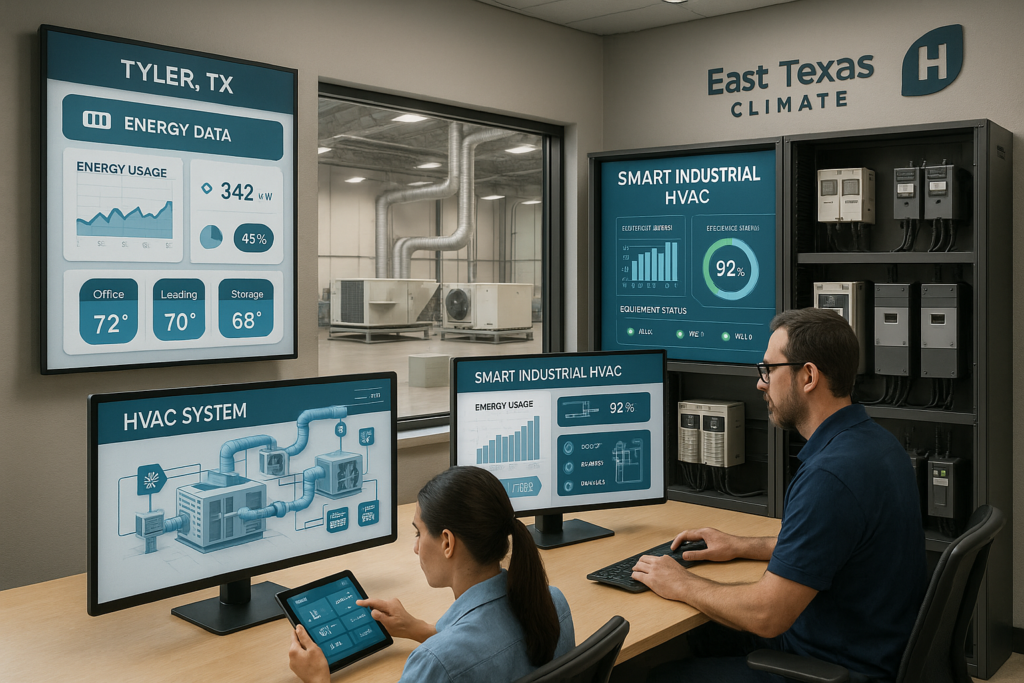
Why Smart Industrial HVAC Is Changing the Game in Tyler TX
Our industrial facilities in Tyler TX are under more pressure than ever to cut operating costs without sacrificing comfort, safety, or productivity. Energy is one of the biggest line items on the budget, and heating and cooling systems are often the quiet culprits. As we’ve worked with industrial clients, we’ve seen that traditional “set it and forget it” systems waste a staggering amount of energy. That’s where smart industrial HVAC comes in.
Instead of simply reacting to temperature changes, a smart system continuously monitors conditions, predicts needs, and fine-tunes performance. We’re talking about using data, automation, and advanced controls to get more comfort from less energy. When done right, these solutions don’t just shave a few dollars off your bill—they can quietly slash energy costs by 20–40% over time.
Our passion is helping businesses in Tyler TX turn their HVAC systems into strategic assets. With the right upgrades and strategies, your plant, warehouse, or production facility can become more efficient, more comfortable, and more reliable—without disrupting operations or breaking the bank.
The Hidden Energy Hogs in Industrial HVAC Systems
Most of us know our industrial hvac equipment uses a lot of energy, but we’re often surprised by just how many small inefficiencies add up. When we evaluate facilities across Tyler TX, we typically uncover a few common “silent killers” of efficiency lurking in the background of everyday operations.
First, there’s the issue of oversizing and poor zoning. Many older systems were designed with a “bigger is better” mindset. That leads to short cycling, wide temperature swings, and equipment running harder than it should. We also see entire zones cooled or heated to the same setpoint, even when only certain areas are occupied or generating heat.
Second, controls are usually outdated or poorly programmed. We walk into facilities where setpoints haven’t been changed in years, night and weekend schedules don’t match actual operating hours, and thermostats are still being adjusted manually. In some cases, different pieces of equipment are effectively “fighting” each other—one unit cooling while another reheats the same air.
Third, maintenance is often reactive instead of proactive. Small issues like clogged filters, failing sensors, or leaking dampers force systems to work much harder. You don’t always see the problem right away, but you will notice it in your utility bills and in reduced comfort and reliability over time.
Common hidden energy wasters we regularly uncover include:
– Constant-speed fans running at full blast 24/7
– Simultaneous heating and cooling in different parts of the same air handler
– Uncalibrated thermostats and sensors drifting several degrees off
– Economizers that are stuck closed or disabled
– Dirty coils and filters creating unnecessary static pressure
When we layer smart technology on top of industrial HVAC in Tyler TX, these invisible problems suddenly become visible. Advanced monitoring and analytics highlight where energy is being wasted, and automated controls step in to correct the issues in real time. That’s why smart solutions are so effective—they don’t just upgrade equipment, they upgrade the way the entire system thinks and reacts to your building’s needs.
Why Old “Set and Forget” Strategies Don’t Work Anymore
Years ago, it was common to set a thermostat, let the system run, and call it good. But energy prices, comfort expectations, and production demands have changed. Our industrial clients now have tighter margins, more sensitive processes, and a greater need to demonstrate sustainability.
“Set and forget” leads to:
– Systems running when no one is in the building
– Over-conditioning spaces to cover “worst case” scenarios
– Increased wear and tear on expensive equipment
With smart industrial HVAC, we replace guesswork with data. Schedules, setpoints, and ventilation rates are all tied to actual conditions, not outdated rules of thumb. That’s how we quietly reclaim a huge chunk of wasted energy without asking your team to constantly fiddle with controls.
How Smart Industrial HVAC Actually Slashes Your Energy Bills
When we talk about “smart” industrial hvac in Tyler TX, we’re not just talking about fancy thermostats. We’re talking about an integrated approach that uses sensors, controls, variable-speed equipment, and software to get the most out of your existing infrastructure. The savings come from many small optimizations that run 24/7 in the background.
One of the biggest game-changers is variable speed technology. Instead of fans, pumps, and compressors running either full-on or off, they ramp up and down based on real-time needs. Because the power required often drops dramatically at lower speeds, just a small reduction in airflow or pump speed can result in large energy savings. We’ve seen facilities cut fan energy use by 30–50% simply by implementing variable frequency drives (VFDs) and smarter control sequences.
Smart controls and automation add another layer of savings. By connecting your industrial HVAC to a centralized building management system, we can:
– Adjust temperatures based on occupancy and production schedules
– Reduce ventilation rates when indoor air quality is already excellent
– Use “economizer” modes to bring in cool outdoor air instead of relying on mechanical cooling
– Pre-cool or pre-heat spaces when energy is cheaper or conditions are favorable
Each of these moves might only save a little in a single hour, but over a month or a year, they add up to serious dollar amounts.
Real-Time Data and Analytics: Your New Secret Weapon
Our approach in Tyler TX is to make your building as “self-aware” as possible. That starts with sensors—measuring temperature, humidity, CO₂, equipment status, and sometimes even power consumption on key components. All of this data feeds into a central platform that can analyze patterns, detect anomalies, and optimize performance.
With real-time data, we can:
– Spot equipment that’s using more energy than expected
– Identify zones that are consistently overcooled or overheated
– Catch failing components before they cause downtime
– Benchmark different buildings or production lines against each other
Over time, patterns emerge. Maybe your warehouse is being cooled aggressively at night when nobody is there. Maybe ventilation is cranked up during a shift that doesn’t actually need that much outdoor air. Once we see those patterns, we can adjust sequences and settings to trim the excess.
Demand Control and Peak Load Management
In many parts of Texas, including Tyler, utility costs spike during peak demand periods. Smart industrial HVAC can help control those peaks without compromising operations. We can temporarily:
– Raise cooling setpoints by one or two degrees
– Reduce ventilation where safe and allowed by code
– Stage equipment so it doesn’t all start up at once
These strategies smooth out your load profile. You may pay less in demand charges, and in some cases you can even participate in utility demand response programs. It’s one more way your HVAC system quietly works behind the scenes to protect your bottom line.
Practical Smart HVAC Strategies for Facilities in Tyler TX
In our experience, the most successful industrial hvac upgrades in Tyler TX start with practical, phased strategies. You don’t have to rip out all your equipment at once or commit to a massive capital project. Instead, we focus on targeted improvements with fast paybacks that prepare your facility for long-term smart control.
One of the first steps we recommend is a detailed HVAC and controls audit. We walk the site, review existing drawings and sequences, talk to your operators, and pull whatever data we can from your current systems. The goal is to understand how your equipment is really being used—not just how it was originally designed on paper.
From there, we usually prioritize:
– Fixing obvious maintenance issues (filters, sensors, dampers, coil cleaning)
– Correcting setpoints, schedules, and overrides that have drifted over time
– Adding or repairing economizers to take advantage of mild outdoor conditions
– Installing variable frequency drives on large fans and pumps where justified
These steps alone can produce meaningful savings, often with payback measured in months rather than years.
Upgrading Controls Without Replacing Everything
Many industrial clients worry that “going smart” means replacing all of their existing HVAC equipment. That’s rarely necessary. We can often integrate new smart controllers, sensors, and gateways with your current chillers, boilers, air handlers, and rooftop units.
We focus on:
– Networked thermostats and zone controllers in key areas
– A centralized control platform or building automation system (BAS) that can grow over time
– Robust, user-friendly interfaces so your team can actually use the features you’re paying for
Our goal is to give your facility managers tools, not headaches. We design dashboards that highlight the metrics that matter: energy use, temperatures, alarms, and trends. When your team can see and understand what’s happening, they become partners in saving energy instead of fighting the system.
Adapting to Tyler TX’s Climate and Local Conditions
Designing smart industrial hvac in Tyler TX means accounting for our unique East Texas climate. We experience hot, humid summers, mild winters, and significant swings in outdoor air quality and moisture levels. That has a big impact on how we configure controls.
For example:
– We often program economizers to account for both temperature and humidity, not just one or the other
– Dehumidification strategies are adjusted so you don’t overcool just to remove moisture
– Filtration and ventilation are balanced to manage pollen, outdoor pollutants, and process-related contaminants
Local utility rate structures also matter. If your rate plan penalizes peak demand, we can program pre-cooling strategies and soft-start sequences to reduce those spikes. When you align your HVAC strategy with local climate and billing structures, your savings compound.
If you’d like to see how other industrial facilities are approaching smart HVAC and energy management, the U.S. Department of Energy offers helpful case studies and best practices at https://www.energy.gov. We build on proven strategies like these and tailor them to the realities of industrial operations in Tyler TX.
Turning Savings into Long-Term Value for Your Facility
For us, the real power of smart industrial hvac isn’t just in cutting this year’s energy bill—it’s in building long-term value into your facility. When your systems are tuned, monitored, and actively managed, they last longer, perform better, and support your broader business goals.
One immediate benefit we see is extending equipment life. When compressors, fans, and pumps don’t constantly slam from off to full speed, they experience less mechanical stress. That means fewer emergency breakdowns, less overtime for your maintenance team, and more predictable capital planning. Smart controls help your equipment operate in its “sweet spot” more often.
There’s also a strong comfort and productivity angle. Workers in production areas, warehouses, and packaging lines are more productive when they’re not freezing in one corner and overheating in another. Stable temperatures and proper ventilation improve morale, reduce complaints, and can even help with retention in a competitive labor market like Tyler TX.
Supporting Safety, Quality, and Compliance
In many industrial environments, HVAC isn’t just about comfort—it’s about process quality and safety. We design smart control strategies that respect and enhance those priorities.
Examples include:
– Maintaining strict temperature and humidity ranges for sensitive materials or products
– Managing pressurization between clean areas and “dirty” or high-dust zones
– Ensuring adequate ventilation in areas with fumes, chemicals, or welding operations
With smart monitoring, deviations from required conditions trigger alerts quickly. Instead of discovering a problem after product is wasted or a process is disrupted, your team can respond in real time. That kind of protection is another way an intelligent HVAC system quietly pays for itself.
Building a Roadmap: From Quick Wins to Full Integration
We’ve learned that the most successful projects in industrial hvac around Tyler TX follow a clear roadmap. It usually looks like this:
1. Assess and benchmark
We audit existing systems, analyze utility bills, and benchmark your facility against similar operations. This gives us a baseline to measure improvements against.
2. Implement quick operational fixes
We correct schedules, setpoints, and basic maintenance issues. These low-cost changes build early momentum and show the value of a smarter approach.
3. Add targeted smart controls
We introduce sensors, VFDs, and zone controls in areas with the highest potential savings or most critical processes.
4. Integrate into a central platform
As your system grows, we connect equipment into a unified control platform, giving you visibility across the entire site or portfolio.
5. Optimize and evolve
With data in hand, we refine sequences, add new capabilities, and adjust to changing production needs or expansion plans.
This phased strategy lets you move at your own pace while still capturing significant savings along the way. You’re not locked into a single huge project; instead, you gradually transform your facility into a smarter, more resilient operation.
When we look across industrial facilities in Tyler TX that have embraced smart HVAC, one trend stands out: the savings and performance gains don’t plateau. The more data we gather and the more we tune the system, the better it gets.
As energy prices continue to fluctuate and sustainability becomes a core business priority, smart industrial hvac isn’t just a nice upgrade—it’s becoming a competitive necessity. Facilities that invest now position themselves to operate leaner, cleaner, and more reliably for years to come.
If you’re ready to see how much your industrial HVAC system might be able to save you, we’re here to help. Our team at Olympus Air & Heat specializes in practical, data-driven solutions tailored to the realities of industrial facilities in Tyler TX and the surrounding East Texas region.
We invite you to take the next step: let us evaluate your current system, identify quick wins, and build a roadmap for smart upgrades that fit your budget and operational needs. To get started or request a consultation, visit us at https://olympusairetx.com/ and reach out today. Together, we can turn your HVAC system into a quiet, powerful engine of savings and performance for your facility.