
Why Your Ducts Matter More Than You Think
When we talk with homeowners in Tyler TX about indoor comfort, most people think first about their air conditioner or heater. But in our experience, the real hidden hero (or troublemaker) of your HVAC system is the ductwork running behind your walls, attic, and crawlspaces. Those metal or flexible tubes quietly deliver every bit of heated and cooled air you breathe, and when they are leaking, dirty, or poorly designed, your whole home pays the price.
We have seen perfectly good AC units struggle because the duct system was an afterthought. Hot and cold spots, high energy bills, dusty rooms, and nagging allergies often trace back to problems in the ductwork. That is why we treat ductwork installation and repair with the same care and attention as the equipment itself. When the ducts are right, everything else in your home’s comfort system works better, lasts longer, and costs you less.
For families here in Tyler TX, we also know that our climate demands a lot from the HVAC system. Long, humid summers and chilly, damp winters mean your ducts handle heavy workloads almost year-round. Any weakness—loose connections, crushed runs, missing insulation, or hidden mold—gets magnified. By identifying and fixing those hidden duct problems, we help you breathe easier, reduce dust, and finally get the comfort you’re paying for.
Hidden Duct Problems That Are Hurting Your Comfort and Health
We have gone into many homes where everything looks fine at a glance, but a quick look into the attic or under the house tells a very different story. Duct problems are usually out of sight, so they quietly steal comfort and air quality without drawing attention—until the power bill arrives or allergy symptoms spike.
Common Signs Your Ducts Need Help
Before we ever open a vent or access a crawlspace, we listen to what homeowners in Tyler TX tell us about their homes. Some warning signs come up again and again:
– Some rooms are always hotter or colder than others
– Your AC or heater runs constantly but still can’t keep up
– There is excessive dust, even soon after cleaning
– You notice musty, stale, or unusual odors when the system runs
– Energy bills seem too high for the size of your home
– You hear whistling, rattling, or airflow noises in ceilings or floors
If you recognize a few of these, it is very possible your ductwork installation or existing duct system has issues that need attention.
The Hidden Culprits Inside Your Ducts
Once we inspect, we often find a combination of issues working together:
– Air leaks at joints and seams
– Disconnected or partially separated ducts in the attic
– Crushed or kinked flexible duct that restricts airflow
– Poorly insulated ducts running through hot attics or cold crawlspaces
– Evidence of pests, moisture, or microbial growth
– Dust, debris, and sometimes construction leftovers inside the duct runs
These problems do more than just waste energy. They can pull dirty, unconditioned air from your attic or crawlspace and mix it with the air you breathe. That’s when allergies, asthma, and respiratory irritation start to become regular problems for your household.
Why Tyler TX Homes Are Especially Vulnerable
Our local climate amplifies duct issues. In the summer, attic temperatures in Tyler TX can soar well above 120°F. Any ductwork installation that is poorly sealed or insulated will lose a significant amount of cooling before the air ever reaches your vents. The same goes for damp winters, when condensation can form on cold ducts and encourage mold and mildew.
Older homes often still rely on outdated duct layouts that were never designed for today’s high-efficiency systems. Even newer homes sometimes have “builder-grade” ductwork that meets minimum code but falls short of true comfort and efficiency. That is why taking a closer look at what is hidden behind the drywall is one of the smartest home upgrades you can make.
How Professional Ductwork Installation and Repair Fixes These Problems at the Source
We have learned over the years that guessing about duct problems never works as well as a structured, professional approach. A reliable solution starts with a thorough inspection and ends with a duct system that is properly sized, sealed, insulated, and balanced for your specific home.
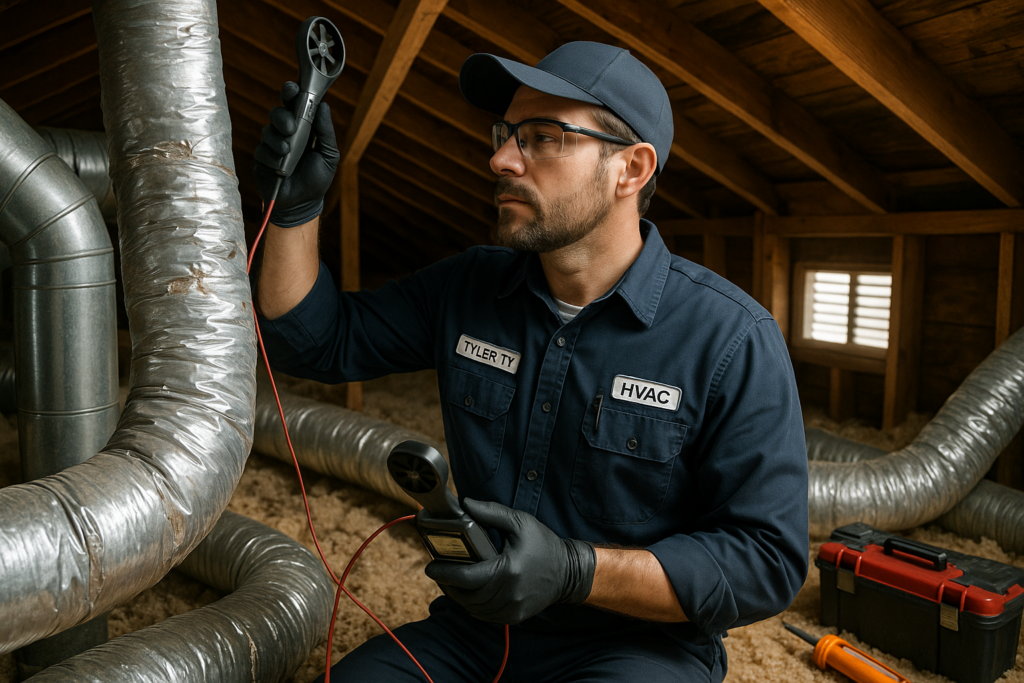
Step 1: Comprehensive Duct Inspection and Testing
We begin by mapping out the entire duct system. That often includes:
– Visual inspection of all accessible duct runs, plenums, and connections
– Checking for obvious damage, kinks, and disconnected sections
– Measuring airflow at different vents throughout the house
– Looking for signs of moisture, pest intrusion, and contamination
– When needed, using duct leakage testing to measure how much air is escaping
This discovery process helps us identify not just the visible problems, but also the performance issues that might not show up to the naked eye. In many Tyler TX homes, we find that the original ductwork installation was not sized properly for the equipment or the layout of the home, which leads to chronic comfort complaints.
Step 2: Repairing, Sealing, and Insulating Existing Ducts
If your ductwork is structurally sound and well-designed, targeted repairs can make a massive difference. Our typical repair work may include:
– Sealing joints and seams with mastic or appropriate tape
– Reconnecting ducts securely to supply and return plenums
– Replacing crushed or severely damaged sections of duct
– Adding or upgrading insulation around ducts in attics or crawlspaces
– Correcting sagging flexible ducts and improving support
By tightening the system, we reduce air loss, improve airflow, and prevent your system from pulling in dirty, unconditioned air from unoccupied spaces. Homeowners often notice that rooms feel more even, the system cycles less frequently, and the air feels cleaner within days of the work being completed.
Step 3: Designing and Installing New Ductwork When Needed
There are times when repairing the existing ducts would be like putting a band-aid on a serious injury. If the layout is poor, the materials are failing, or the system was never designed for your current equipment, a new ductwork installation is often the best long-term investment.
A professional installation in Tyler TX includes:
– Calculating the correct duct sizes based on your equipment and home layout
– Planning supply and return locations for even distribution of air
– Using quality materials appropriate for local conditions and building codes
– Sealing and insulating the entire system to modern standards
– Balancing the airflow so each room receives what it needs
We treat a new duct system like the circulatory system of your home. When we get it right, your HVAC equipment runs more efficiently, your indoor air is cleaner, and comfort becomes consistent from one room to the next.
Health, Comfort, and Energy Benefits of Fixing Your Ducts
We see a lot of homeowners in Tyler TX focus mainly on “How much will this cost?” when they first ask about duct repair or a new ductwork installation. That is understandable, but once the work is done, they often tell us they wish they had done it sooner because of how many aspects of daily life improve.
Cleaner Air and Easier Breathing
Your ducts are the highway your air travels on. When that highway is leaky and dirty, you end up breathing whatever is in your attic, crawlspace, or wall cavities. After a proper sealing, cleaning, or replacement, homeowners typically notice:
– Less dust settling on furniture and floors
– Reduced allergy and asthma symptoms
– Fewer musty or “old house” odors
– Less need to constantly run air purifiers
By sealing leaks and keeping contaminants out of the system, we help your air filters and HVAC equipment actually do their jobs. Families with children, seniors, or anyone with respiratory issues often report the biggest relief after their duct system has been addressed.
More Consistent Comfort in Every Room
Uneven temperatures are one of the most common complaints we hear in Tyler TX. One bedroom freezes while the living room bakes, or the upstairs is always hotter than downstairs. When we redesign or repair ductwork correctly, you get:
– More even temperatures between rooms and floors
– Improved airflow from previously weak vents
– Quieter operation, with fewer whistles and rattles
– Shorter, more effective heating and cooling cycles
We have found that even simple corrections—like resizing certain duct runs, adding a return, or fixing a major leak—can dramatically change how comfortable a home feels. Suddenly, those “problem rooms” are livable again.
Lower Energy Bills and Longer Equipment Life
Leaky, poorly designed ducts force your HVAC system to work much harder than necessary. Studies from the U.S. Department of Energy estimate that typical homes can lose 20–30% of the air moving through their duct systems due to leaks, holes, and poorly connected ducts. In a climate like Tyler TX, that lost air translates directly into wasted money.
By investing in proper ductwork installation or repair, you can expect:
– Reduced monthly energy bills as the system stops wasting conditioned air
– Less wear and tear on your AC and furnace or heat pump
– Fewer breakdowns and emergency repair calls
– Extended lifespan of your HVAC equipment
Over time, the energy savings and reduced repair costs can offset much of the initial investment. We love when homeowners tell us that their power bill dropped noticeably after we fixed their ducts—that is a real, measurable win.
When to Consider a Ductwork Upgrade in Tyler TX
Many families aren’t sure whether they need a minor duct repair, a complete ductwork installation, or simply a professional evaluation. We always recommend starting with an honest assessment tailored to your home, but there are some common situations when it makes sense to take a closer look.
Key Moments to Evaluate Your Duct System
You should strongly consider a duct inspection or upgrade if:
– You are installing a new HVAC system or upgrading to higher efficiency
– Your home has been remodeled, expanded, or reconfigured
– You are dealing with chronic hot and cold spots
– You see visible damage or disconnected ducts in the attic or crawlspace
– You notice mold, strong odors, or signs of pests near vents
– Your energy bills have risen without a clear reason
When we install new heating and cooling equipment in Tyler TX, we nearly always evaluate the ducts at the same time. Pairing a new system with an old, leaky duct network is like putting a race engine into a car with bald tires—it will never perform as designed.
How We Tailor Duct Solutions to Your Home
No two homes in Tyler TX are exactly alike, and your duct system should reflect that. Our process focuses on:
– Listening to your comfort concerns and health priorities
– Evaluating age, size, and layout of your home
– Considering attic, crawlspace, and insulation conditions
– Matching duct design to the exact equipment serving your home
Sometimes the answer is a targeted repair and sealing project. Other times, a full ductwork installation is the best path to long-term comfort and efficiency. We always walk homeowners through the options, costs, and expected benefits so you can make an informed decision.
If you would like to learn more about modern duct and indoor air quality solutions, resources from the U.S. Department of Energy at https://www.energy.gov/energysaver/ducts and the U.S. Environmental Protection Agency at https://www.epa.gov/indoor-air-quality-iaq can be helpful starting points.
We are proud to help our neighbors in Tyler TX breathe easier by treating duct systems as the critical part of home comfort that they truly are. Whether you suspect leaks, notice dust and allergies, or are planning a full HVAC upgrade, addressing your ducts can transform how your home feels every day.
When you are ready to stop guessing about what is hiding in your ductwork and start enjoying cleaner air, better comfort, and lower bills, we are here to help. Reach out to us today through https://olympusairetx.com/ to schedule an evaluation or talk about ductwork installation and repair options for your home in Tyler TX. Let’s get your air moving the way it should—so you can finally breathe easier at home.