
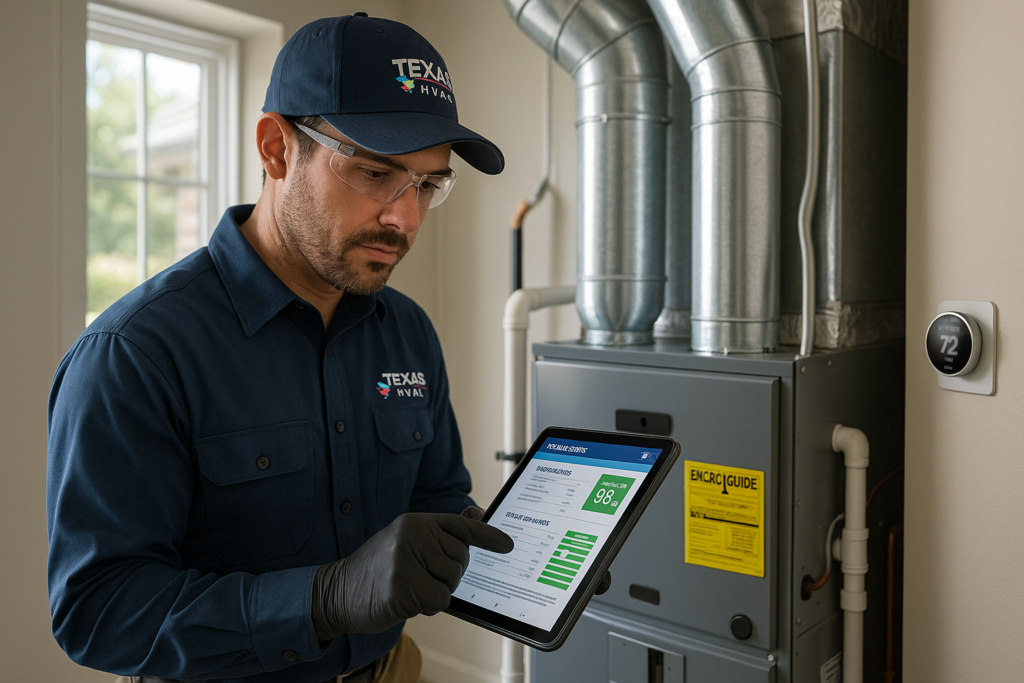
What You Need To Know Before Replacing Your Heating System
Our team has helped a lot of homeowners in Tyler TX decide whether it’s truly time for a new heater, or whether a smart repair will do the job. Before you schedule a home heating installation, it pays to slow down, get the facts, and make sure you’re investing wisely. A new system is a big decision, and we want you to walk into it with confidence, not pressure.
We see the same questions over and over: “Is my system really done?” “What size do I need?” “Which brands are worth it?” “Will this actually lower my bills?” In our town, where winters may be short but cold snaps can be sharp, the right answers can save you thousands of dollars and years of frustration. In the next sections, we’ll walk through the key things we look at in every home, so you know exactly what to ask, what to avoid, and how to get the most from a new heating system in Tyler TX.
Deciding If You Really Need A New Heating System
Before anyone talks you into a new home heating installation, we believe you should know exactly where your current system stands. Replacing too early wastes money; replacing too late can leave your family uncomfortable and your safety at risk. In our experience across Tyler TX homes, these are the main factors we weigh.
Age, Condition, and Repair History
Age alone doesn’t tell the whole story, but it matters. We usually look at:
– 0–10 years old: Often worth repairing unless there’s a major failure or improper installation.
– 10–15 years old: This is the “gray zone.” We compare repair costs and energy use to the price of a new system.
– 15+ years old: Many units are nearing the end of their expected life and are often good candidates for replacement.
We also ask about repair history:
– Have you had two or more major repairs in the last two years?
– Are you calling for service every season?
– Do parts seem harder to find or backordered?
If your heater in Tyler TX is constantly breaking down or has a cracked heat exchanger, rusted components, or serious airflow issues, we usually recommend planning a home heating installation instead of putting more money into a failing system.
Comfort, Safety, and Energy Red Flags
Beyond age and repairs, your everyday comfort and safety tell us a lot about your system’s condition.
Comfort warning signs include:
– Hot and cold spots: Some rooms are roasting while others are freezing.
– Long run times: System runs constantly and still can’t reach your thermostat setting.
– Excessive noise: Banging, rattling, screeching, or booming sounds.
Energy and safety red flags:
– Rising utility bills even though your use hasn’t changed.
– Yellow burner flames on gas furnaces instead of steady blue.
– Frequent cycling on and off.
– Signs of carbon monoxide concerns (detectors alarming, headaches or nausea when the heat is on).
In Tyler TX, power bills can already be high due to summer cooling loads, so an inefficient heater just adds to the pain. When we see a combination of comfort issues, high energy bills, and safety risks, we talk honestly about whether a new home heating installation will give you better value, comfort, and peace of mind than another repair.
Choosing The Right Heating System For Your Tyler TX Home
Once you’ve decided replacement is the smart move, the next step is selecting the right type of system. Our town has a unique climate: mostly mild winters with occasional Arctic blasts. That means what works in Minnesota may be overkill here, and what works in South Texas might leave you chilly. We walk homeowners through these options almost every day.
Furnace, Heat Pump, or Hybrid System?
Each heating option has its own strengths. We like to explain it in plain language:
– Gas furnace:
– Great if you already have natural gas service.
– Strong, fast heat for cold nights.
– Often paired with a central air conditioner.
– Good choice for homeowners who value powerful heating and don’t mind slightly higher gas usage on cold nights.
– Electric heat pump:
– Works as both a heater and an air conditioner.
– Very efficient in mild climates like Tyler TX.
– Uses electricity only; no gas line needed.
– Ideal for homeowners focused on energy efficiency and year-round comfort.
– Dual-fuel or hybrid system:
– Combines a heat pump with a gas furnace.
– Uses the heat pump in mild weather and gas furnace in extreme cold.
– Optimizes comfort and efficiency across the whole season.
Our passion is matching the system to your home and your lifestyle. For many homes in Tyler TX, a modern heat pump or dual-fuel setup offers exceptional comfort and savings. However, if you love the feel of a strong, gas furnace blast on cold mornings, we can size and design one that fits your space efficiently.
System Sizing, Efficiency Ratings, and Comfort Features
A key part of any home heating installation is getting the size right. Bigger is not better. An oversized system will:
– Short-cycle (turn on and off constantly).
– Wear down parts faster.
– Create temperature swings.
– Waste energy.
An undersized system will:
– Run non-stop on cold nights.
– Struggle to maintain comfort.
– Drive your electric or gas bill higher.
We perform a proper load calculation (not just a guess based on square footage) that considers:
– Home size and layout.
– Insulation levels.
– Window types and orientation.
– Air leakage and duct layout.
– Local climate conditions in Tyler TX.
We also look at efficiency ratings:
– AFUE (Annual Fuel Utilization Efficiency) for gas furnaces.
– HSPF and SEER/SEER2 for heat pumps and combined systems.
We typically recommend:
– High-efficiency units when you plan to stay in your home long term and want lower monthly bills.
– Mid-range efficiency when you’re balancing budget and performance, or planning to move within a few years.
Comfort features you might appreciate:
– Variable-speed blowers for quieter, more even heating.
– Two-stage or modulating gas valves.
– Smart thermostats and zoning for room-by-room control.
– Enhanced filtration or indoor air quality accessories.
We’ve seen many homeowners in Tyler TX amazed at how much more evenly their home heats, and how much quieter their new unit is, when the system is properly sized and paired with the right features.
What To Expect During A Professional Home Heating Installation In Tyler TX
Knowing what actually happens on installation day can take a lot of stress out of the process. We’ve installed systems all over Tyler TX, and our approach always focuses on safety, cleanliness, and clear communication from start to finish.
Planning, Permits, and Scheduling
Before we ever bring a new furnace or heat pump to your home, we handle the preparation steps that many people never see.
Our process usually includes:
– In-home evaluation: We inspect your existing equipment, electrical panel, gas lines, and ductwork. We listen to your comfort complaints and goals.
– System design: We size the equipment, select compatible components, and plan any duct or electrical updates.
– Permits and code compliance: We work within Tyler and Smith County requirements to make sure your new system meets local codes and manufacturer specifications.
– Scheduling around you: We coordinate an installation date that works with your schedule and explain how long the job is likely to take.
We always encourage homeowners to ask questions at this stage. A trusted contractor should be happy to explain why a particular system was recommended and how the home heating installation will be carried out from start to finish.
Installation Day: Removal, Setup, and Testing
On the day of your home heating installation, we treat your home as if it were our own.
Here’s what we typically do:
– Protect your home:
– Lay down drop cloths or runners.
– Wear shoe covers where appropriate.
– Move carefully through your space.
– Remove the old system:
– Safely disconnect gas, electrical, and refrigerant lines.
– Remove the old furnace, air handler, or heat pump.
– Dispose of equipment according to regulations.
– Install the new equipment:
– Set and level the new furnace or air handler.
– Install the outdoor heat pump or condenser unit if needed.
– Update or repair duct connections where necessary.
– Ensure proper venting and combustion air for gas furnaces.
– Upgrade wiring or breakers if required by code or manufacturer.
– Test and verify operation:
– Check gas pressure, electrical connections, and refrigerant charge.
– Verify airflow and temperature rise.
– Measure static pressure in ducts.
– Program your thermostat and run the system in heating and cooling modes.
At the end, we walk you through how to use your new thermostat, how to change filters, and what maintenance your new system will require. Our goal is that by the time we leave your Tyler TX home, you not only have a fully installed system but also the knowledge to use it confidently.
Hidden Factors That Make Or Break Your New System’s Performance
Over the years, we’ve seen beautiful new systems in Tyler TX underperform because a few “hidden” details were ignored. Our experience has taught us that the quality of your home heating installation is just as important as the equipment you choose. We pay close attention to these often-overlooked factors.
Ductwork, Airflow, and Home Envelope
Even the most efficient furnace or heat pump can’t do its job well if the ductwork is leaking or undersized. We regularly find:
– Disconnected or crushed ducts in attics.
– Ducts that are too small for the new system’s airflow needs.
– Poorly sealed joints leaking conditioned air into unconditioned spaces.
– Supply and return imbalances that cause pressure problems and drafts.
When we assess a home in Tyler TX, we usually:
– Inspect visible ductwork for damage, poor design, or outdated materials.
– Recommend sealing or replacing problem sections.
– Suggest adding return air in closed-off rooms to improve circulation.
– Check insulation in the attic and around ducts.
We also think about the “envelope” of your home:
– Weatherstripping around doors and windows.
– Insulation levels in attic and walls.
– Air leaks around plumbing, wiring, and recessed lights.
A small investment in tightening up your home can significantly boost the comfort and efficiency of your new system. We’ve seen homeowners cut energy usage and improve comfort simply by pairing a new heater with sensible duct and insulation upgrades.
Brand, Warranty, and Installer Reputation
Homeowners often ask us which brand is “best.” The truth is, many leading brands make solid equipment. The bigger difference we see, day after day in Tyler TX, is the quality of the installation and follow-up service.
Key things we recommend looking at:
– Manufacturer warranty:
– Length of parts coverage.
– Availability of extended warranties.
– Any conditions tied to regular maintenance.
– Labor warranty:
– How long your contractor stands behind their work.
– What’s covered if something fails due to installation issues.
– Installer reputation:
– Are they licensed and insured in Texas?
– Do they have strong local reviews?
– Are they experienced with gas, electric, and heat pump systems?
– Do they offer ongoing maintenance plans and responsive service?
We always tell homeowners: a top-tier system installed poorly will perform worse than a decent system installed well. Our passion is doing the job right the first time, so your investment truly pays off in comfort, reliability, and lower utility bills.
Maximizing Comfort, Efficiency, and Lifespan After Installation
Once your new home heating installation is complete, the story doesn’t end. How you use, maintain, and fine-tune your system over time has a huge impact on comfort and costs. We coach our neighbors in Tyler TX on simple, practical steps to protect their investment.
Maintenance, Filters, and Smart Thermostat Use
Regular care can easily add years to your system’s life. We strongly recommend:
– Annual professional tune-ups:
– For gas furnaces: cleaning burners, checking heat exchanger, verifying gas pressures, inspecting flue and safety controls.
– For heat pumps: checking refrigerant levels, cleaning coils, testing defrost cycle, tightening electrical connections.
– Filter changes:
– Check monthly and replace as needed.
– Many homes do well with 1–3 month replacement schedules.
– Clogged filters restrict airflow, stress your system, and raise your bills.
– Smart thermostat strategies:
– Set reasonable temperatures (for example, 68–70°F when you’re home in winter).
– Use setback schedules when you’re away or asleep.
– Avoid drastic, frequent temperature swings that cause unnecessary cycling.
We’ve noticed that homeowners in Tyler TX who keep up with these simple habits tend to have fewer breakdowns, better comfort, and noticeably lower energy costs over the life of their systems.
Improving Indoor Air Quality and Long-Term Value
A new heating system is also a chance to improve the air you breathe every day. We often talk with families in Tyler TX about:
– Better filtration:
– Upgraded media filters.
– Properly sized filter cabinets to reduce airflow restrictions.
– Filter options for allergy or asthma concerns.
– Add-on IAQ products:
– Whole-home dehumidifiers or humidifiers (as needed).
– UV lights for coil cleanliness.
– Air purifiers or electronic air cleaners.
– Ventilation:
– Kitchen and bathroom exhaust fans in good working order.
– Fresh air solutions for tightly sealed homes.
Indoor air quality directly affects comfort and health, especially for kids, seniors, and anyone with respiratory issues. When we design or install a new system, we think long term—about your family’s comfort, safety, and well-being, not just getting hot air out of the vents.
A well-maintained, properly designed home heating installation in Tyler TX can:
– Provide 15–20 years of reliable service (depending on system type).
– Reduce your monthly utility bills compared to an older unit.
– Increase the resale value and appeal of your home.
– Make your living spaces more uniformly comfortable and quieter.
Our team is here to guide you not just on day one, but throughout the life of your system.
We’ve seen first-hand how the right heating replacement—planned carefully, installed correctly, and maintained regularly—can transform a home in Tyler TX. When you take the time to evaluate your current system honestly, choose equipment that fits our climate and your lifestyle, pay attention to the “hidden” details like ductwork and airflow, and commit to a simple maintenance routine, you get more than just heat. You get comfort, peace of mind, and real savings year after year.
If you’re thinking about a home heating installation or wondering whether now is the right time to replace your system in Tyler TX, we’d be honored to help you sort through your options. You can learn more about our services and schedule a visit at https://olympusairetx.com/. Reach out today, and let us help you design a heating solution that keeps your home warm, efficient, and comfortable for many winters to come.